New · 4 Oct 2026 DecayGuard is public. Dated re-entry predictions, graded nightly on a hash-chained ledger, misses included. Correction 2026-10-07: our launch figure applied the evidence-grace rule to misses but not hits; the corrected headline is on the methods page. Open DecayGuard →

Deep Field Labs · Space intelligence

We sell numbers you can check.

DeepfieldLabs builds space-intelligence products on one rule: no claim without a receipt. Detection rates are published with dates and sample sizes, alerts are cryptographically re-verifiable, and predictions are graded in public — misses included. Two products run on that standard today: DebrisGuard, live orbital anomaly monitoring, and DecayGuard, dated re-entry prediction — public since 4 October 2026.

31,336 objects re-scored nightly 0.91 ROC-AUC audited decay watch 1,605 re-entry calls graded in public 100% alerts re-verifiable
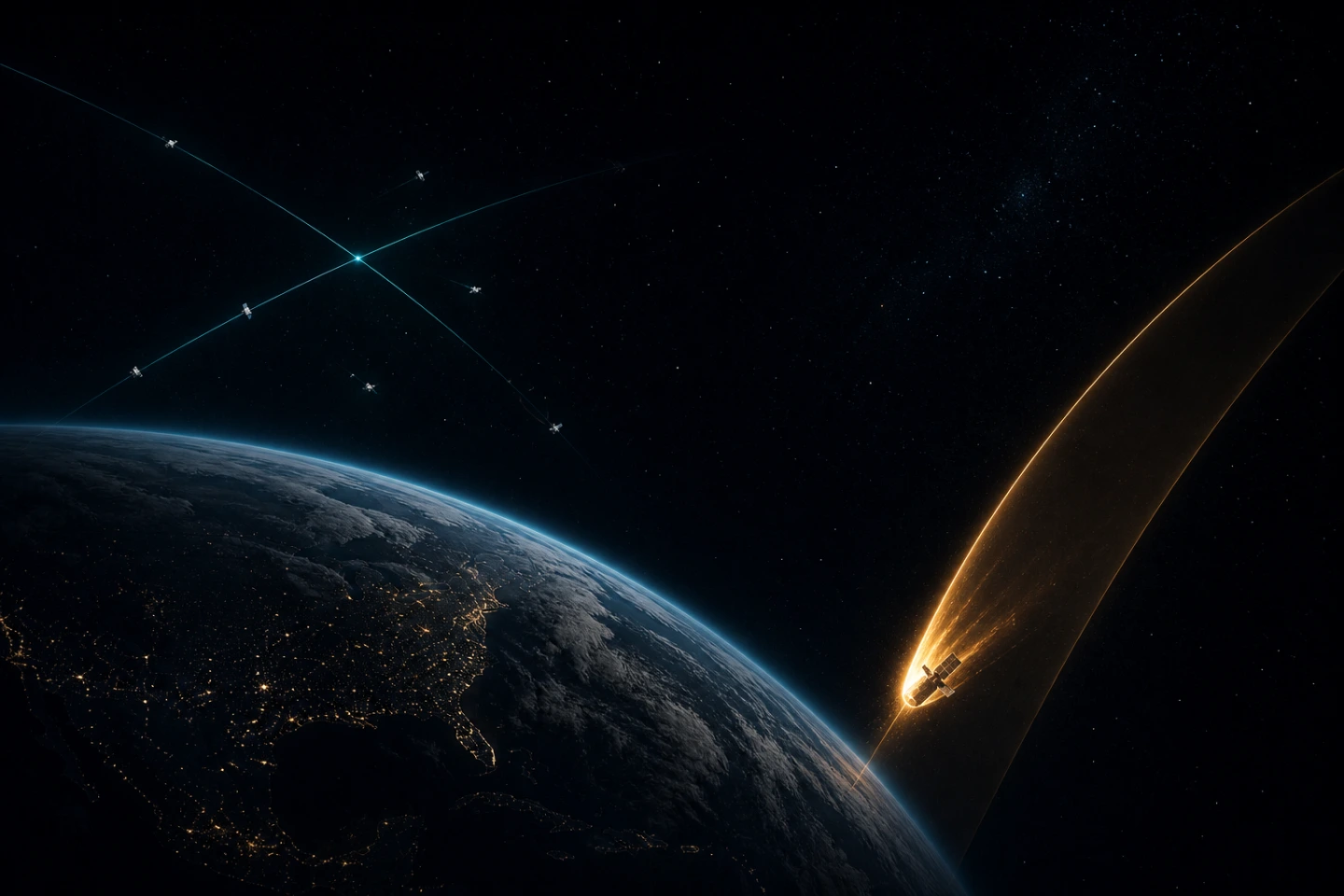
One Earth, two lenses: cool teal conjunction trajectories in low orbit (DebrisGuard) beside a warm amber re-entry arc with a predicted descent corridor (DecayGuard)

The evidence standard

Every product we ship follows three rules

Space-intelligence buyers are asked to trust black boxes. We build the opposite: products whose claims a sceptical engineer, underwriter, or regulator can independently re-check.

RULE 01

Numbers carry dates

Every published figure states when it was measured and on what sample — 0.91 AUC, n=522, 12 May 2026, not "industry-leading accuracy". When production numbers move, the sites move with them.

RULE 02

Artifacts are re-verifiable

DebrisGuard alerts are HMAC-signed with a public verify_url; DecayGuard's ledger is SHA-256 hash-chained. Either can be re-computed on a laptop, without an account and without trusting us.

RULE 03

Misses are published

DecayGuard grades every prediction against observed Space-Track decay records and keeps wrong calls on the public record with the same prominence as hits. A track record you can't lose is not a track record.

Products

Two lenses on the same sky

DebrisGuard watches the whole catalogue for anomalies as they happen. DecayGuard commits to what happens next. Deep detail, pricing, and live dashboards live on each product's own site.

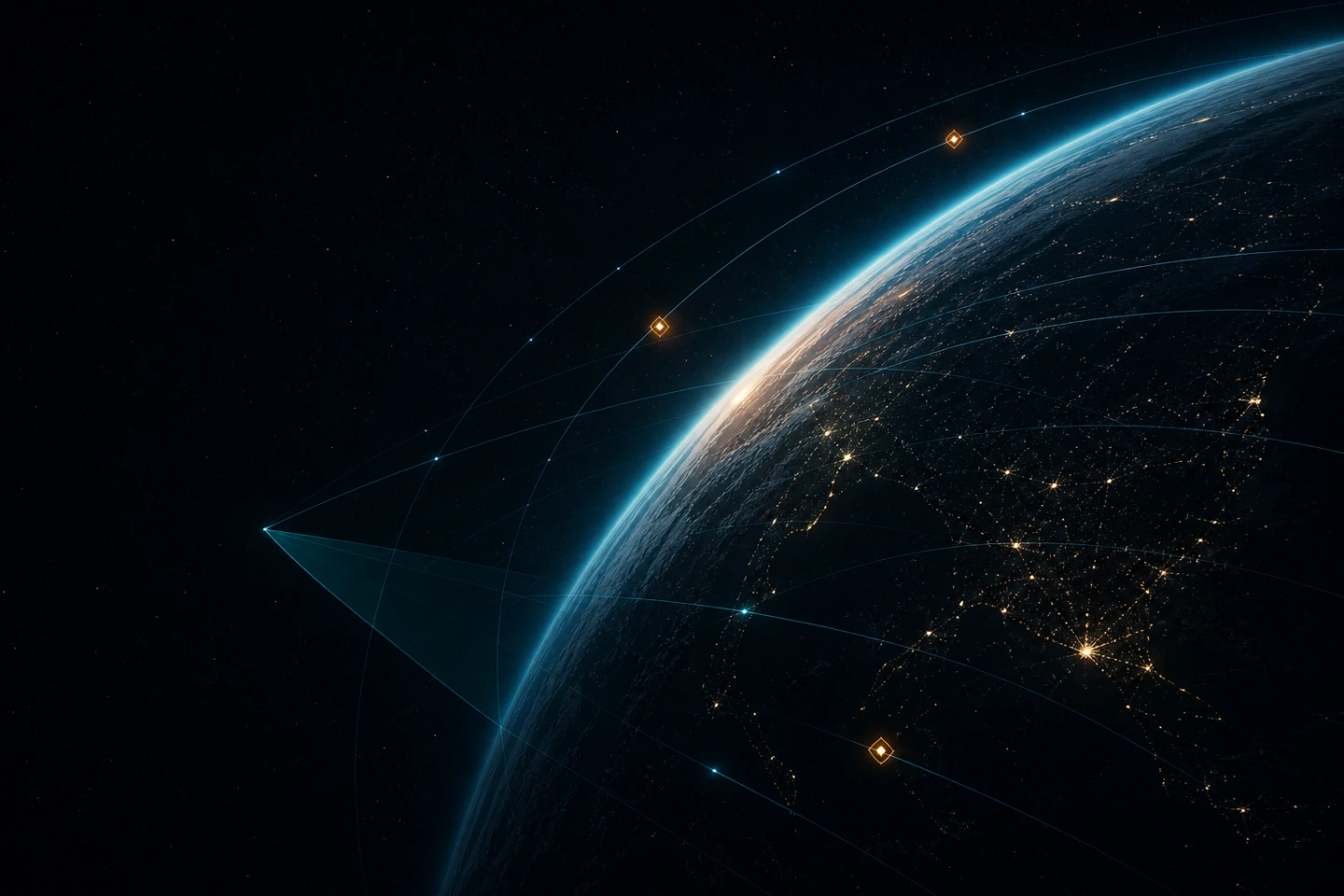
Live · self-serve DebrisGuard: rim-lit Earth from low orbit with tracked satellites, thin teal trajectory arcs, and a highlighted conjunction between two converging objects

DebrisGuard

Orbital anomaly monitoring with alerts your insurer can re-verify.

  • Three production detectors — catalog d², BSTAR-drift and manoeuvre fingerprinting — fused into one anomaly score across the public catalogue, nightly.
  • Signed forensic dossiers — every alert ships with its inputs, model version and an HMAC signature, re-verifiable on any laptop via a public URL.
  • 1% of a sensor prime's price — $0 to $299/mo self-serve, against $50k+/yr sales-led incumbents, on the same public-catalog inputs.
0.91
ROC-AUC early decay · n=522 · 12 May 2026
918
manoeuvres flagged · last 14 days
388
confirmed by post-burn TLE convergence

Free Watcher tier is the real product · 5-minute guide
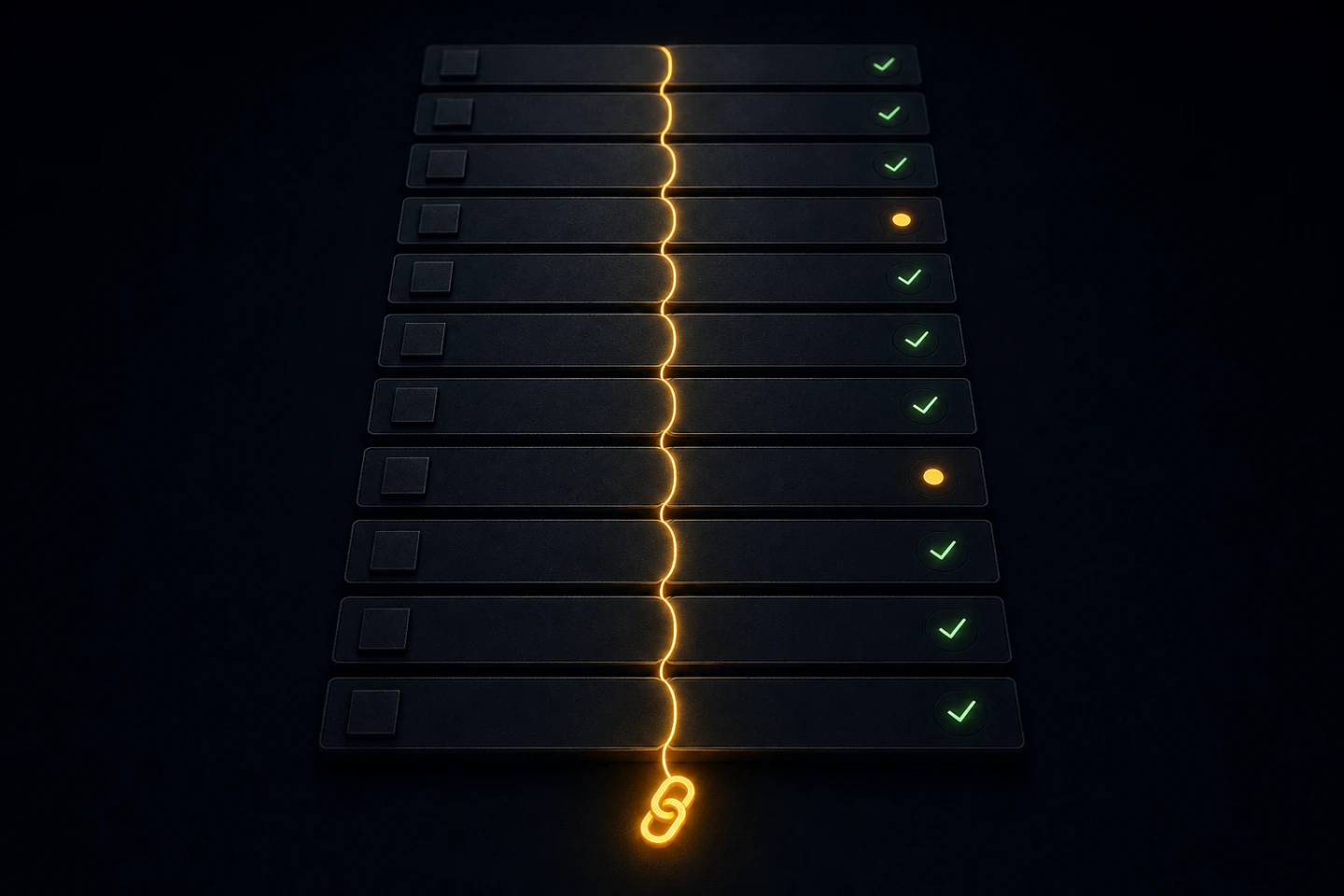
Live · public since 4 Oct 2026 DecayGuard track record: a hash-chained ledger of dated re-entry predictions, each entry linking to the next, with graded outcomes marked

DecayGuard

Re-entry predictions dated before the outcome and graded in public.

  • Falsifiable by design — each call names an object, a window and a date of issue, then stands or falls against observed Space-Track decay records. Never graded against other forecasts.
  • Hash-chained public ledger — every entry links to the last by SHA-256. Rewriting history breaks the chain, and anyone can download the receipts and check.
  • Graded by a published standard — the DFL Prediction Grading Standard v1 fixes what counts as a miss and when a call may be judged; it was frozen on launch day and every number on the site is computed from the ledger under it.
0.35
evidence-mature precision · 129 matured calls (cohort-consistent; corrected 2026-10-07) · the stricter stream issued since mid-August matures from mid-November
1,609
dated predictions issued · 223 confirmed in-window
23 days
median lead on confirmed re-entries

Free: track record + daily watchlist teaser · Insight tier: full watchlist, per-object history, API · numbers above as of 4 Oct 2026, refreshed nightly on the product site

The company

A small lab that ships production systems

DeepfieldLabs is an Australian engineering lab. We take public, messy, high-volume data feeds — the ones everyone can access but few can defend decisions on — and turn them into products where the evidence chain is the feature.

Both products run on one chassis: the same ingestion pipelines, the same validation gates, the same signed-artifact publishing, operated as a nightly production system rather than a research demo. That chassis is also available for custom work — if your organisation has a data problem where the answer has to hold up to a regulator, an underwriter, or a court, talk to us.

Production-grade from day one

Infrastructure as code, automated validation gates on every artifact, and monitoring. What we demo is what runs nightly.

Deployed in your region

Region-locked storage and data-residency boundaries for regulated and government workloads, in any major cloud region.

Start free, scale seamlessly

Every product has a free tier that is genuinely useful. Upgrades carry your data and configuration forward with no migration.

Get in touch

Let's talk

DecayGuard Insight access, enterprise deployments, custom evidence-grade data platforms, or research collaboration — we read everything.